Transformative transitional justice for climate justice

In 2025, two South African communities created the first explicitly transitional justice process for climate harms. Emphasising the experiences and solutions of residents directly affected by climate change, the process was also novel in using a transformative approach to transitional justice. Participants developed measures that demonstrate a more comprehensive way of conceptualising the effects of climate change – as a wide range of profound and long-lasting harms, rooted in and exacerbating structural inequalities – and of responding to them in backwards-looking and forward-looking ways that enable deeper social change. As such, this transformative transitional justice process represents a new methodology and opens fresh pathways towards climate justice, which bridge the local and the global.

This initiative was born of the recognition that while international climate negotiations are caught at a near impasse, those least responsible for carbon emissions continue to experience the worst climate impacts and harms. In this context, the field of transitional justice offers ideas and practices for thinking 'outside the box' about addressing climate challenges. Through mechanisms such as truth commissions, reparations, prosecutions and institutional reforms, transitional justice has become a go-to solution for dealing with harms in diverse transitional contexts. Moreover, lessons learnt from 40 years of practice have given rise to transformative approaches, consisting of contextualised, bottom-up measures that address the historical and ongoing injustices that tend to underpin harms. The overlaps between transformative transitional justice and climate justice represent an opportunity to revitalise climate action.

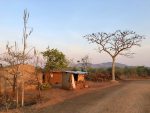
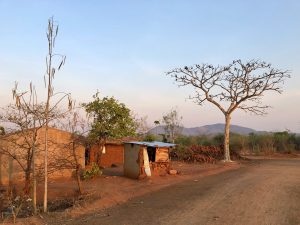
Like many communities in South Africa's KwaZulu-Natal Province, Newcastle and Dannhauser have been wracked by severe flooding, extreme heat and droughts caused by changing weather patterns. Guided by a participatory ethos, more than 75 residents came together to co-design a set of transitional justice measures to address the resulting climate harms, in collaboration with CSVR. The process we developed consists of four measures: a truth-telling process on climate harms experiences, causes and solutions; a commemoration event for past climate harms, combined with an educational workshop on future climate change responses; the design and construction of a physical memorial honouring all those affected by climate harms; and reform-focused advocacy for participatory climate change response planning and implementation at the municipal level.

An example of what transformative transitional justice for climate harms looks like in practice, the process serves as a new platform for internal mobilisation and organisation, as well as for national and international advocacy for instituting active community participation in developing inclusive and contextually responsive policies and practices on mitigation, adaptation and addressing loss and damage. This kind of bottom-up process can complement and strengthen top-down national and international efforts, as well as serve as a discrete form of justice in transition itself.  

This initiative foregrounds the ideas, practices and voices of communities affected by climate change – particularly young people and women, who disproportionately experience its impacts and have a generational stake in better solutions to climate impacts and harms. This ground-breaking transitional justice measure is intended to set a precedent, ignite debate, and open new avenues for addressing the climate crisis in an inclusive and transformative manner.

Participatory transitional justice design

Climate harms truth telling

Climate harms memorialisation

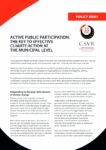
Advocacy for participatory climate change responses

Videos

Community-based truth-telling processes on climate harms are a form of transformative transitional justice. From the selection of truth tellers in this video, we learn about the profound harms experienced by an affected community – including loss of life, livelihoods, education, food security, cultural practices, and physical and mental health – and how they increase the vulnerabilities of young people, women, and the elderly.

The speakers share their own solutions to climate harms, which range from people's education, adjusting agricultural practices, and ensuring more accessible healthcare, to providing mutual psychosocial support and working with a range of government and civil society stakeholders to mobilise for community-led climate responses.

By highlighting contextualised, bottom-up measures that address the historical and ongoing injustices that usually underpin climate harms, this truth-telling process is an example of transformative transitional justice.

Publications

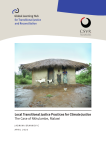
Project team

Jasmina Brankovic

Jasmina Brankovic

Project Manager
Senior Research Specialist, CSVR

Sibongile Ngema

Sibongile Ngema

Community Facilitator

Tsholofelo Nakedi

Tsholofelo Nakedi

Community Advocacy Specialist, CSVR

Thandeka Witness Buthelezi

Thandeka Witness Buthelezi

Community Facilitator

Zanele Zondo

Zanele Zondo

MHPSS Officer, CSVR

Themba Khumalo

Themba Khumalo

Community Facilitator

Amina Mwaikambo (until June 2025)

Amina Mwaikambo (until June 2025)

Senior MHPSS Practitioner, CSVR

Wandile Kubheka

Wandile Kubheka

Documenter, Sobs Digital Production

Translate »

You can support CSVR’s work on justice, peace, and human rights

X