Research

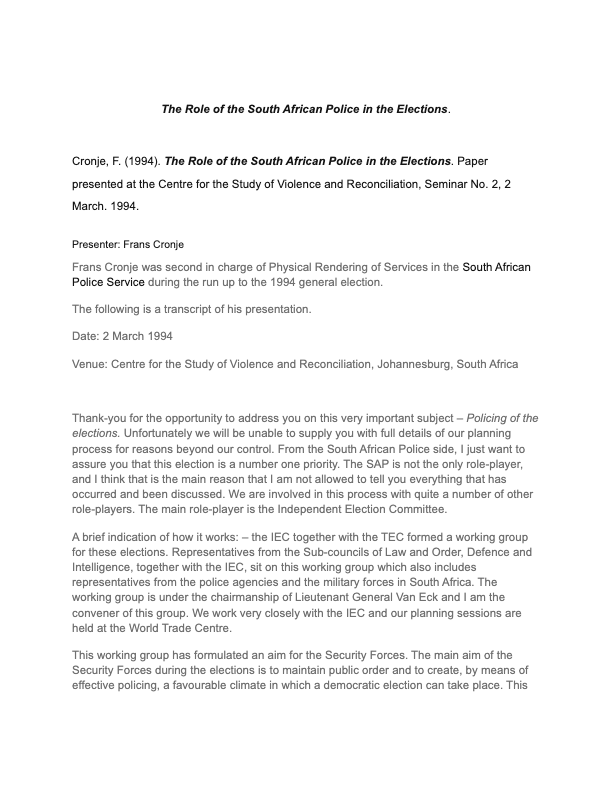
In this paper an attempt is made to develop a clearer understanding of the 'necklace' form of burning which has evolved in South Africa. Three areas of exploration are suggested. Firstly, traditional Bantu ideas of punishment, witchcraft and fire are discussed in relation to the practice of necklacing. In the second area of research, possible explanations are examined for the resurgence of the practice of burning which had virtually disappeared this century. This leads into the third area, where the necklacing act, which includes the preparations, is analysed as a ritual.

Joanna Ball
03 Feb 1994

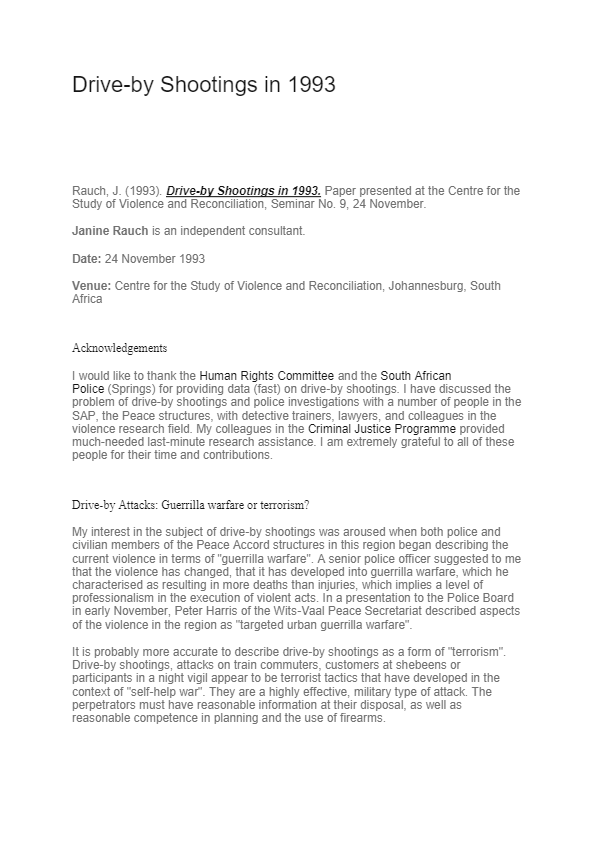
This is a transcript of a presentation by Frans Cronje, second in charge of Physical Rendering of Services in the South African Police Service during the run up to the 1994 general election. In his speech at the Centre for the Study of Violence and Reconciliation, he addresses challenges associated with policing the first democratic election in South Africa.

Frans Cronje
03 Feb 1994

This paper reflects on how the Committee on South African War Resistance (COSAWR) and its 'resister' thinking impacted on the African National Congress. It opened up the terrain of the military to contest and helped the movement understand militarisation. Before COSAWR and 'resister,' the issue had been discussed in anti-apartheid circles, but no strategy had emerged, possibly because no-one could gauge whether the white community would be receptive. 

Janine Rauch
01 Feb 1994

In the past five or six years, employers, trade unionists, researchers and our criminal and industrial courts have confronted the growing magnitude and brutality of violence in industrial conflict. This article puts focus on the potential of violence in industrial relations and the experiences of trauma resulting from high levels of community violence, which are fundamentally inseparable.

Graeme Simpson
03 Jan 1994

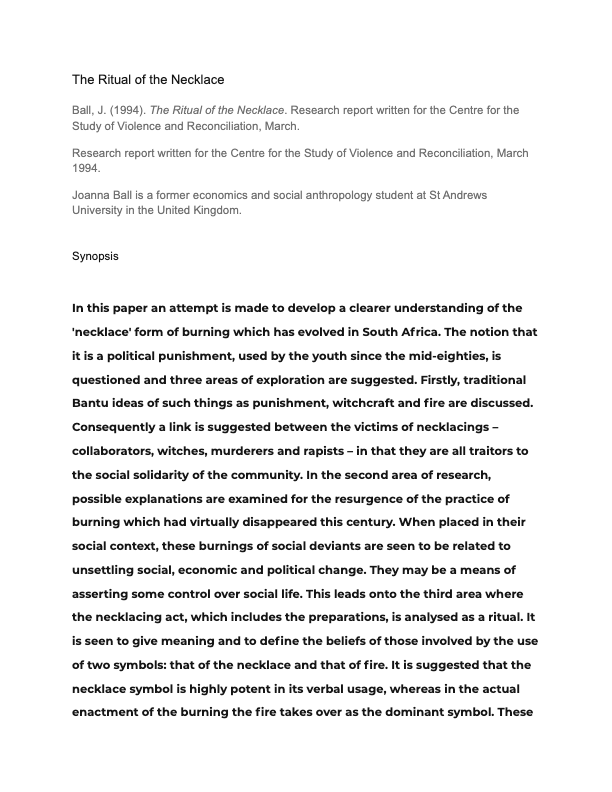
This paper describes drive-by shootings as a form of terrorism and examines how drive-by shootings, attacks on train commuters, customers at shebeens or participants in a night vigil appear to be terrorist tactics that have developed in the context of "self-help war."  It emphasises that they are highly effective, military types of attacks that require perpetrators to have reasonable information at their disposal, as well as competence in planning and the use of firearms.

Janine Rauch
24 Nov 1993
Translate »

You can support CSVR’s work on justice, peace, and human rights

Close Welcome Bar