ArticlesMediaGender-based ViolenceDebating Change: Having More Women in Parliament Doesn't Necessarily Mean That More Importance Is Being Placed on Women's NeedsEarly proponents of democracy firmly believed that women, like lunatics, servants, slaves and children needed neither the vote nor representation on governance structures. Not only were they convinced that women's interests could be safely subsumed under those of male family members, but they were also quick to argue that women's fragile, emotional natures rendered them incapable of moral reasoning, delivery… Read More CSVRAugust 5, 2005
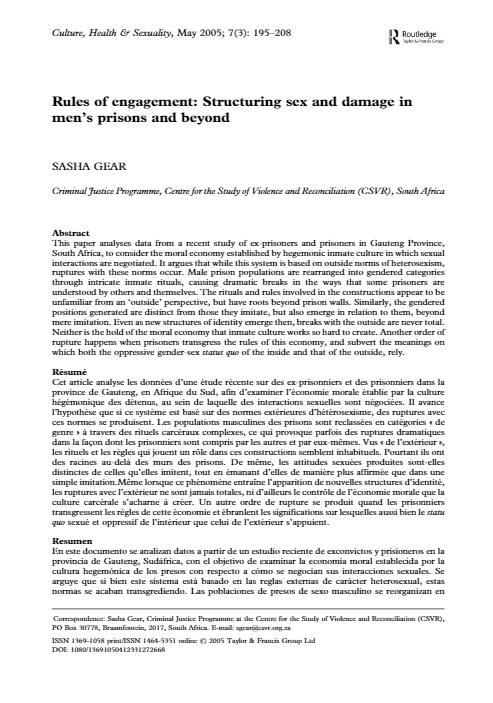
PublicationsResearchCorrectional Services, Gender-based ViolenceRules of Engagement: Structuring Sex and Damage in Men's Prisons and BeyondThis following paper analyses data from a previous study of ex-prisoners and prisoners in Gauteng Province, South Africa, to consider the moral economy established by hegemonic inmate culture in which sexual interactions are negotiated. It argues that while this system is based on outside norms of heterosexism, ruptures with these norms occur. Male prison populations are rearranged into gendered categories… Read More Sasha GearMay 2, 2005
PublicationsResearchDisability and Violence against Women, Gender-based ViolenceOn the Margins: Violence Against Women with DisabilitiesThe Centre for the Study of Violence and Reconciliation (CSVR) undertook a small-scale exploratory research project on gender-based violence and disabled women. We aimed to make visible the nature and forms of violence against women with disabilities, their particular vulnerabilities to violence, and the barriers they confront accessing assistance. The study focused on women with physical, visual and hearing disabilities… Read More Ereshnee Naidu, Sadiyya Haffejee, Lisa Vetten and Samantha HargreavesApril 1, 2005
ArticlesMediaCorrectional Services, Gender-based ViolenceBehind the Bars of South African Prisons: Gendered Roles and Vulnerability of Male InmatesIn South African prisons, different kinds of sexual interactions and relationships take place between men. The majority of these are abusive, exploitative, and involve rape and various degrees of coercion. Newcomers to prison are especially vulnerable because they are unfamiliar with the "rules" of inmate culture and are easily manipulated. Seasoned inmates regard them as sources of material goods including… Read More CSVRFebruary 1, 2005
PublicationsResearchGender-based Violence, PolicingUrban PredatorsThe subsequent small-scale study was retrospective, and focused on all cases of rape and attempted rape reported by complainants 12 years old or older at six central Johannesburg police stations during 1999. Read More Lisa Vetten and Sadiyya HaffejeeJanuary 3, 2005
PublicationsResearchCustomary Law, Gender-based ViolenceCustomary Law and Domestic Violence in Rural South African CommunitiesThe following report is a study with the purpose of surveying the rules of customary law in order to identify those which may protect women from domestic violence and those which could increase women's vulnerability or limit their ability to resist. The ultimate purpose is for the conclusions generated by this study to be used to formulate questions which will… Read More Ericka Curran and Elsje BonthuysDecember 20, 2004