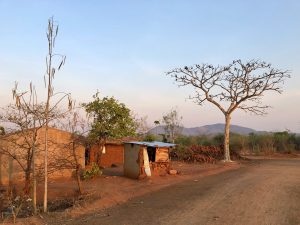

This report applies a transformative transitional justice lens to the numerous climate actions designed and implemented by residents of Nkhulambe, a community in Malawi heavily affected by climate change. Typically used to deal with gross human rights abuses, transitional justice is an established field of theory and practice that is designed to acknowledge the truth of past harms, provide redress to those affected, ensure the accountability of those responsible, and create an institutional environment that deters future harms. A transformative approach to transitional justice goes further to address the root causes of harms and provoke substantive social change. Prioritising the knowledge and solutions of those most affected, it takes the form of bottom-up, community-led measures, which stand alone as well as contribute to top-down, official processes.
Applying this lens allows a more holistic view of both climate impacts and climate responses in Nkhulambe. Focusing on community experiences, it reveals that creeping climate change combined with disasters like Cyclone Freddy have resulted in a wider range of profound and lasting climate harms than commonly acknowledged by the public and even many climate experts. These include loss of life, physical health, homes, essential infrastructure, education, livelihoods, food security, cultural practices, social order, and mental health.
This lens also shows that residents have developed their own climate responses that respond more fully to the manifold climate harms they have experienced than top-down climate responses to date. Government-sponsored initiatives have tended to be short-term rather than sustained, and premised on one-way information transfers rather than two-way dialogue and collaboration between state actors and affected residents. In addition to being more pluralist and cooperative, residents' climate responses combine forward-looking solutions, such as emergency preparedness and reforestation, with backwards-looking solutions that acknowledge the truth of climate harms in the area and promote redress through memorialisation and advocacy for participatory reforms.
Nkhulambe residents' efforts can be read as climate-focused transformative transitional justice in practice. They are community-led measures that address climate harms which occurred in the past, while building solidarity in the present, in order to prevent and reduce the harms of future climate events. Moreover, they have the potential to complement and strengthen top-down national and international efforts, making them more inclusive and responsive to communities affected by climate harms, as well as opening the door to more equitable climate action.
Local Transitional Justice Practices for Climate Justice - Brankovic 2026

Jasmina Brankovic is a transitional justice and peacebuilding expert. She is the Senior Research Specialist at the Institute for Integrated Transitions. She was previously the Senior Research Adviser at the Centre for the Study of Violence and Reconciliation. With a focus on participatory methods, Dr. Brankovic conducts research on inequality and socioeconomic transformation, climate justice, narrative change, and civil society strategies in transitional contexts. Her publications include 'Violence, Inequality and Transformation: Apartheid Survivors on South Africa's Ongoing Transition' (2020), 'The Global Climate Regime and Transitional Justice' (2018) and 'Advocating Transitional Justice in Africa: The Role of Civil Society' (2018). She has a PhD in Political Science from the University of Marburg.