

The Draft Marriage Bill of 2022 shows the intention of the South African Legislature to change its marriage law to recognise all forms of intimate partnerships, irrespective of gender, sexual orientation, or religious, cultural, and other beliefs. This is in line with the broader goal of our country to reach substantive equality on all fronts and bring legislation regarding marriages in line with the Constitution.[i] However, while there are important additions to the legislation in pursuit of these aims, there have been some omissions in the Bill that are a cause for concern.
Historically, South Africa's law on marriages has been fragmented and led to legal uncertainty. Several pieces of legislation currently deal with marriages in their different forms, such as the Marriage Act, the Civil Union Act, and the Recognition of Customary Marriages Act.[ii] The Draft Marriage Bill seeks to consolidate all laws relating to marriage in the country in one piece of legislation to reduce uncertainty.
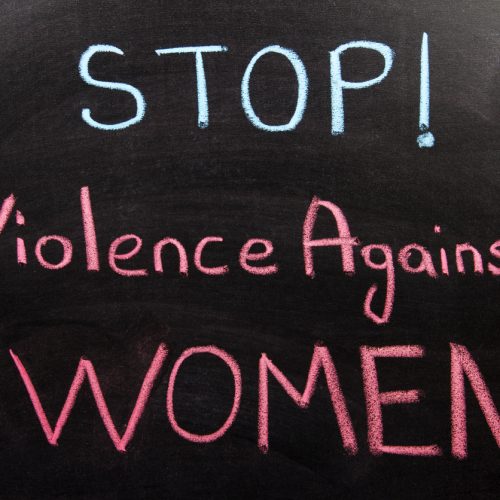
Notable changes have been introduced by the new Bill. Firstly, the Bill aims to eradicate child and forced arranged marriages in line with international standards by criminalising marriages to persons under eighteen.[iii] Previously, children over the age of sixteen were able to enter into marriages with consent from their guardians and upon application to a registered Marriage Officer. This change is in line with the constitutional principle that the interests of the child are paramount and must be prioritised over any religious or cultural considerations. South Africa is faced with a pandemic of violence against women and girls. The cultural practices that allowed children under eighteen to be married off contributed to various social ills, like maternal mortality rates, unwanted pregnancies, and sexually transmitted diseases and infections. Secondly, polygamous marriages are recognised in the Draft Bill, but the requirements for a valid polygamous marriage are prescribed.[iv] While this prescription promotes ideologies of patriarchy which allow for men to have multiple partners whilst limiting women to one partner, it also takes away from the objective of recognising the diverse genders within society. In attempting to mainstream gender equality, the State and all stakeholders should move away from assuming the mention of gender disparities and diversities to advance the women peace and security agenda. Finally, all spouses will be considered equal under the new legal framework, whereas the capacity to acquire and dispose of assets, or enter contracts and litigate, is currently limited in certain circumstances.[v]
Despite these changes, certain requirements of the new Bill may be unduly restrictive and result in prejudice. While it was not previously required for customary marriages to be registered in terms of the Recognition of Customary Marriages Act, the new Bill requires that all marriages be registered, failing which the marriage will be considered null and void (unless such marriages are registered within a grace period of twelve months after the Act comes into force). Considering the difficulty that South African women in customary marriages have had to bear in attempting (and often failing) to register their marriages after the death of their spouse, it is concerning that lack of registration in this Bill would invalidate the marriage.[vi] Many rural infrastructures make it difficult for rural populations to access business centres or towns where services such as Home Affairs are based. There are various bureaucratic barriers that women currently face in registering their customary marriages such as the requirement of two witnesses and presence of both spouses. Where the Bill is prescriptive about registration, such barriers should be addressed to make such processes more accessible. Otherwise, many women will be prejudiced by this requirement.
Further, due to the historical lack of reference to Muslim marriages, there has been undue discrimination against Muslim married women. Lack of explicit reference to such marriages in the Draft Bill may lead to further lack of legal certainty regarding their rights within a marriage, including issues with regards to the registration process for existing Muslim marriages, since the Act will not act retrospectively to existing marriages.[vii]
The Bill is also silent on the coexistence of civil law marriages with customary or religious marriages, which is commonplace in South Africa. Under the current framework, if a couple in a civil marriage subsequently concluded a customary or religious marriage, the state regarded the latter marriage as valid.[viii] The Bill therefore creates uncertainty by not stipulating the fate of subsequent customary or religious marriages, which could affect inheritance or child custody because the legal systems may govern these issues differently.[ix]
Another issue is that domestic partnerships are completely excluded from the new Bill. This is in direct contravention of the developments in South African courts where women's rights in domestic partnerships have been advanced due to the recognition of their vulnerability and the State's failure to address it through legislation.[x] Women in these positions often have limited to no bargaining power in these relationships and are dependent on the financial support of their partners. The Constitutional Court explicitly affirmed the existence of domestic partnerships in Bwanya v The Master in 2021, recognising that such arrangements should have the same protection under the law as marriages.[xi] As the Court acknowledged, unmarried partnerships have serious implications for finances, human dignity, property ownership, and child custody.[xii] It is therefore both irrational and in contravention of the ruling of the Constitutional Court to distinguish between marriages and domestic partnerships by excluding the latter from the ambit of the Bill.
While the Bill recognises polygamy, it ignores polyandry – the marriage of a woman to more than one man. A polygamous marriage is defined as a marriage in which a male spouse has more than one spouse at the same time. This patriarchal definition results in gendered discrimination that has no rational basis.[xiii] Further gendered discrimination may result due to the Bill's definition of ilobolo, which is defined as –
"property in cash or in kind…which a prospective husband or the head of his family undertakes to give to the head of the prospective wife's family in consideration of a customary marriage."[xiv]
This definition does not anticipate a role for women in the process by implying that only traditionally male family heads can receive it. The definition should instead redefine ilobolo as –
"money, property, or anything of value given by the groom or his family to the bride's family in consideration of marriage and/or to symbolise a union between the families."
the Draft Bill is a welcomed attempt towards inclusion of all people, in relation to marriages, irrespective of race, religion, cultural affiliation, or sexual orientation. However, as it stands it promotes further exclusion of the vulnerable groups such as women and the LGBTQIA community by having certain aspects which may lead to legal uncertainty and discrimination. While the need to consolidate South Africa's marriage and partnership laws into one framework is necessary, it is important to ensure that this step is intentional in promoting a socially just society by paying attention to the lived realities of all South Africans it aims to include. For this Bill to be effective, certain important, but parallel, aspects of our legal system require more detailed attention to avoid uncertainty, which affects those most vulnerable in our society.
[i] The Constitution of the Republic of South Africa, 1996.
[ii] Act 25 of 1961, Act 17 of 2006, and Act 120 of 1998 respectively.
[iii] Go Legal (2023) Draft Marriage Bill – All for one, one for all. Available at https://www.golegal.co.za/marriage-bill-legislation/#:~:text=The%20purpose%20of%20the%20new,in%20line%20with%20the%20Constitution. Accessed 2023/09/12.
[iv] Ibid.
[v] Ibid.
[vi] Women's Legal Centre (2023) Statement on the Draft Marriage Bill, 2022. Released 2023/09/04.
[vii] Ibid.
[viii] Business Tech (2023) New marriage laws for South Africa – what it means for life partners and unmarried couples living together. Available at https://businesstech.co.za/news/lifestyle/709088/new-marriage-laws-for-south-africa-what-it-means-for-life-partners-and-unmarried-couples-living-together/. Accessed 2023/09/12.
[ix] Ibid.
[x] Women's Legal Centre (2023) Statement on the Draft Marriage Bill, 2022. Released 2023/09/04.
[xi] Bwanya v Master of the High Court, Cape Town and Others 2022 (3) SA 250 (CC).
[xii] Business Tech (2023) New marriage laws for South Africa – what it means for life partners and unmarried couples living together. Available at https://businesstech.co.za/news/lifestyle/709088/new-marriage-laws-for-south-africa-what-it-means-for-life-partners-and-unmarried-couples-living-together/. Accessed 2023/09/12.
[xiii] Ibid.
[xiv] Draft Marriage Bill (2022) Chapter 1.